Network of Biocultural Inventories in Protected Areas
InBioRed is an initiative aimed at strengthening the knowledge and conservation of biodiversity in Mexico through citizen science, integrating scientific knowledge and biocultural wisdom. The project focuses on the management of Natural Protected Areas (NPAs) and Areas Voluntarily Destined for Conservation (AVDCs) as a joint initiative between the National Commission of Natural Protected Areas (CONANP) and Transformación, Arte y Educación, A.C. (TAE). The same framework can be applied to other spaces such as municipalities, archaeological sites, Magical Towns (Pueblos Mágicos), tourism and real estate developments, agricultural, livestock, or forestry agro-industries, etc.
The project addresses four key challenges:
- Deficit of updated biological inventories.
- Lack of integration of biocultural species into management.
- Low social participation in knowledge generation and conservation processes.
- Production of adequate information on species that is accessible to society and guides conservation and restoration actions.
Innovations
The InBioRed model combines four main innovations:
- Massive participation through citizen science (park rangers, communities, and visitors) in local inventories.
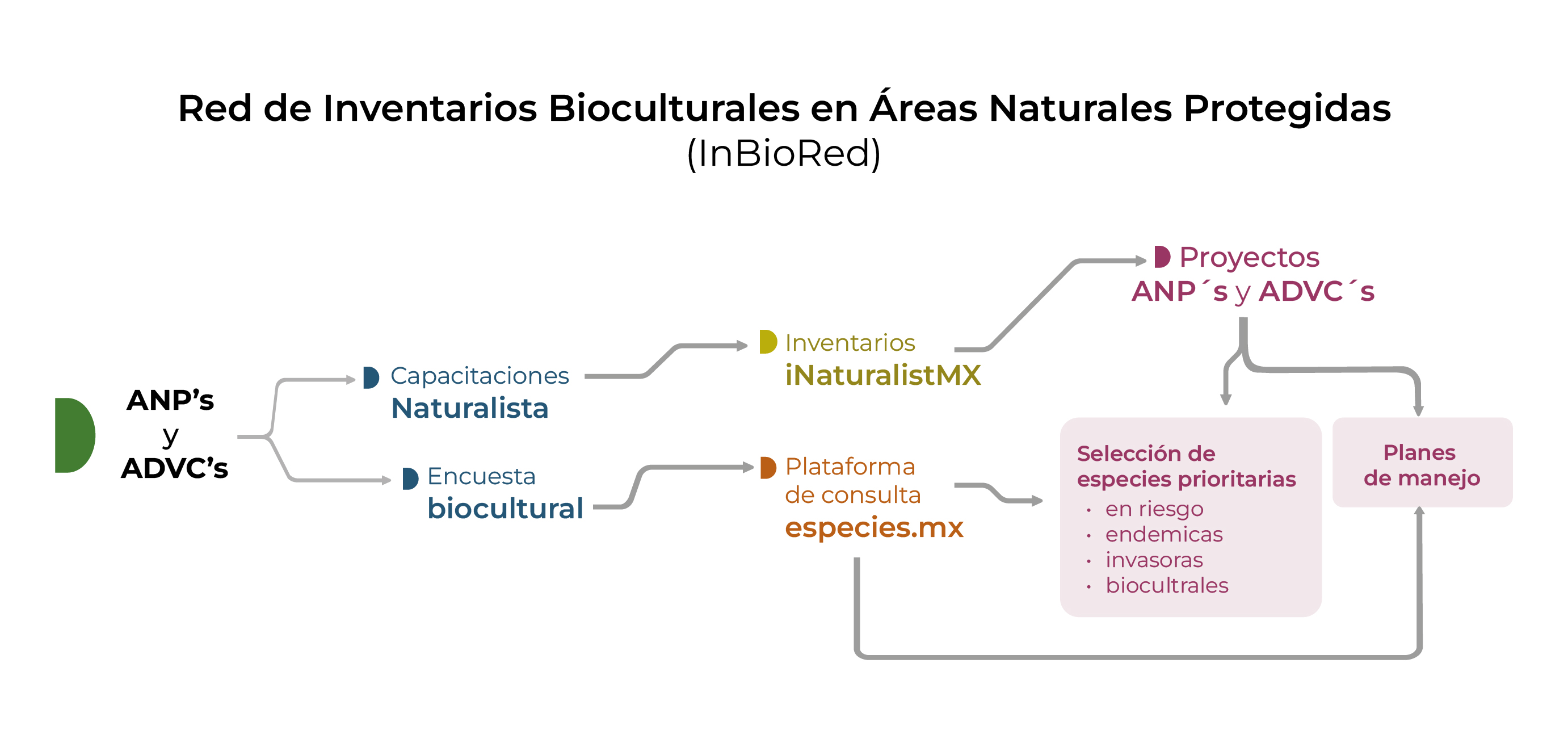
- Accessible digital infrastructure (iNaturalistMX + automated analysis) with real-time observation records.
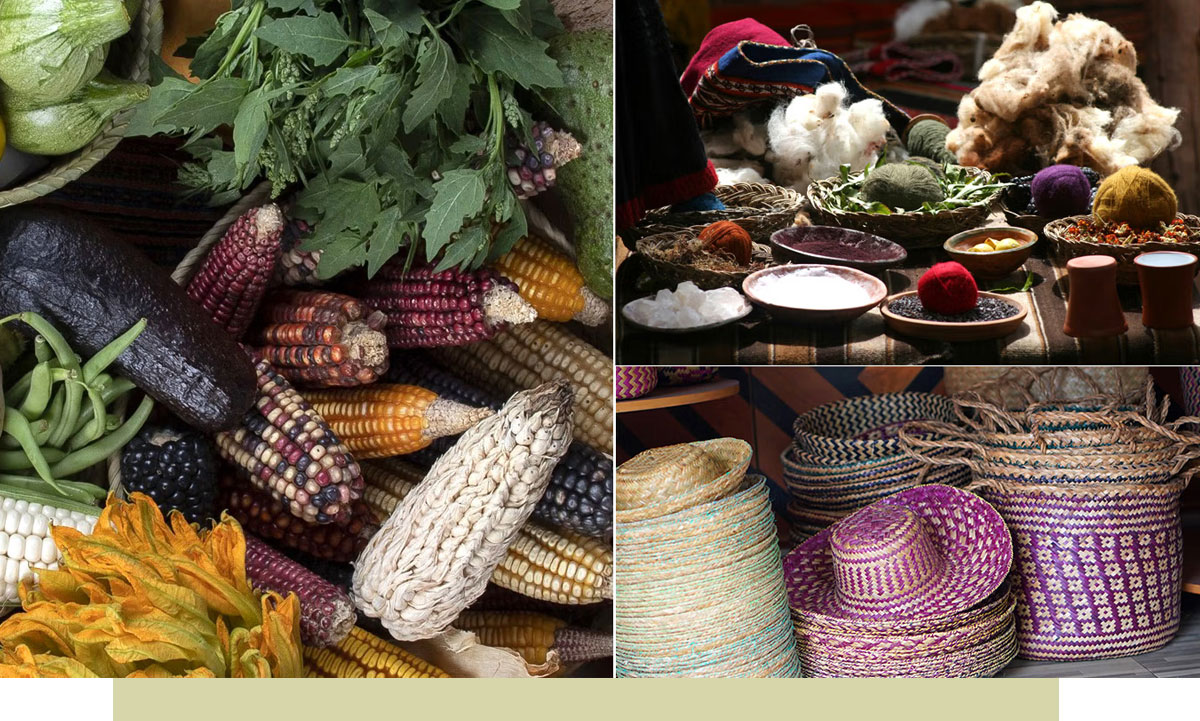
- Integration of local knowledge into inventories through a digital survey of biocultural species.
- Development of an interoperable query platform with species information (in development).
This allows for expanding coverage, reducing costs, and improving the quality of information for decision-making.
Objective and Implementation Pillars
Central objective: to improve biological and biocultural inventories through the articulation and strengthening of institutional and social capacities.
Strategic pillars:
- Training and knowledge exchange (technical and traditional).
- Social participation through digital platforms.
- Automated information generation.
- Public communication and awareness.
Scope
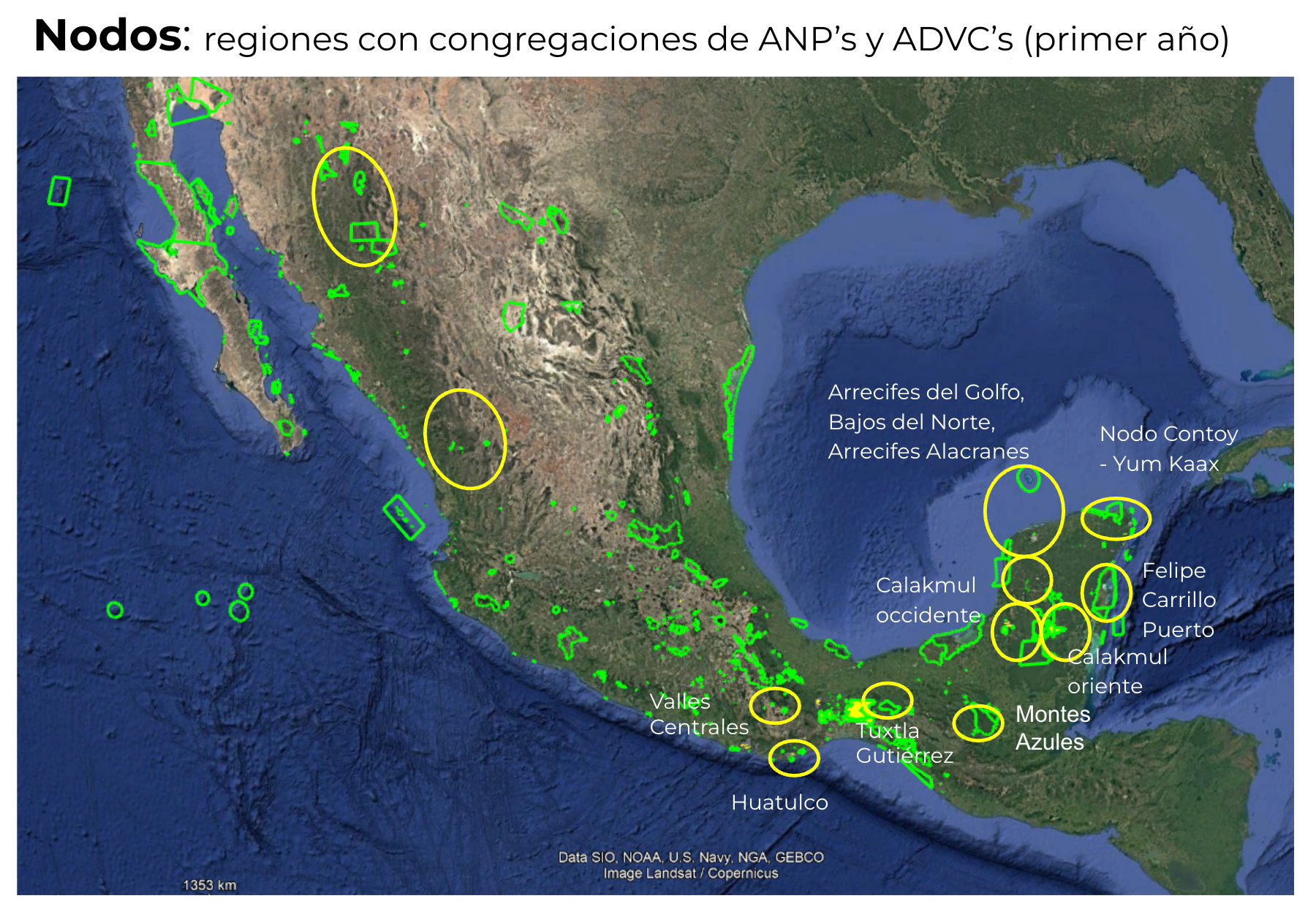
- Target coverage: around 120 Natural Protected Areas and Areas Voluntarily Destined for Conservation in 4 years.
- Initial phase:
- Southern Border, Isthmus, and South Pacific Region (Oaxaca and Chiapas)
- Yucatán Peninsula Region (Campeche, Yucatán, and Quintana Roo)
- North and Sierra Madre Occidental Region (Chihuahua and Durango, virtual).
- Operational model: implementation by regional nodes (clusters of NPAs and AVDCs) for logistical efficiency.
Operational Components
a) Training
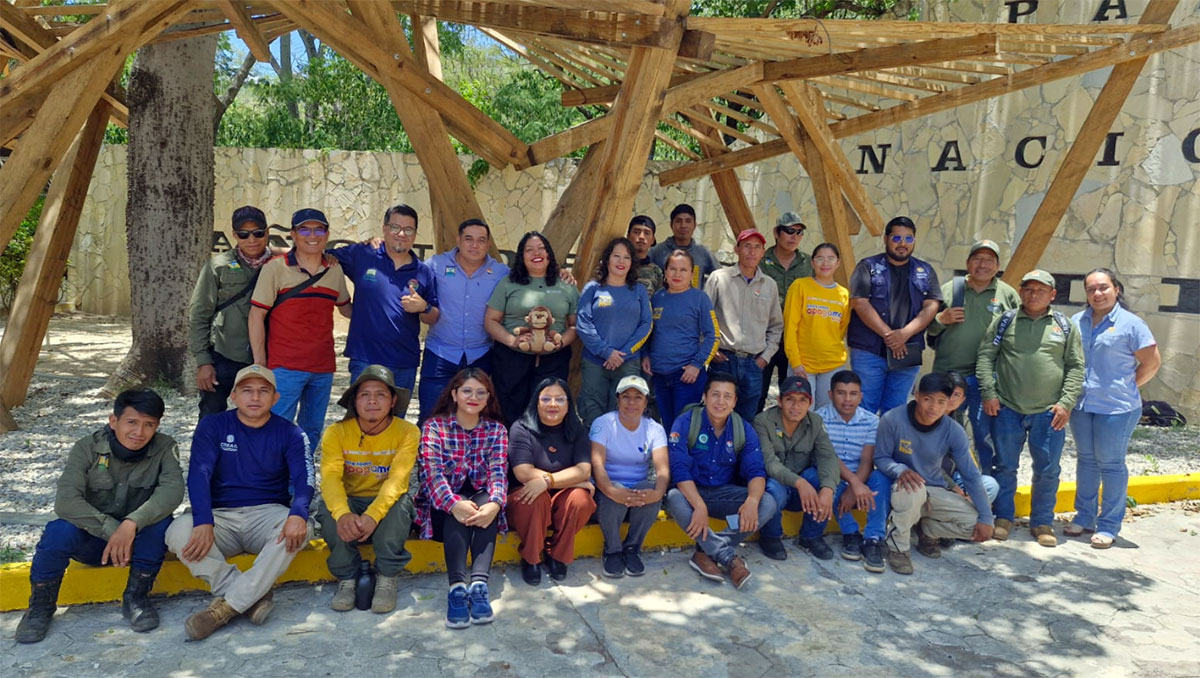
- Theoretical and practical workshops on nature conservation with tutors from the Mexican node trained in pedagogical instruction and knowledgeable about the iNaturalistMX platform.
- Training for protected area guardians (NPAs and AVDCs) in ecological framework and citizen science (iNaturalistMX).
- Ongoing support for participants through periodic visits.
b) Platform and Analytics
- Recording of observations in real time.
- Automated reports (species, risk status, endemism, invasive, biocultural) (in development).
- Data visualization for management (in development).
c) Participation and Communication
- Public biological inventories of NPAs and AVDCs.
- Accessible biocultural database.
- Incentives and recognition for participants.
d) Biocultural Integration
- Incorporation of local knowledge regarding the valuation and use of species.
| CONANP Region | Node | Participants | NPAs and AVDCs | 1st workshop | 2nd workshop | 3rd workshop |
|---|---|---|---|---|---|---|
| Southern Border, Isthmus, and Pacific | Chiapas, Ocosingo | 5 | 5 | Aug 24 & 25 | ||
| Chiapas, Tuxtla Gutiérrez | 27 | 5 | Aug 17 & 18 | |||
| Oaxaca, Coast, Huatulco | 30 | 11 | Sept 1 & 2 | |||
| Oaxaca, Central Valleys | 24 | 8 | Sept 3 & 4 | |||
| Yucatán Peninsula and Caribbean | Northern Quintana Roo (Cancún) | 19 | 8 | Sept 8 & 9 | ||
| Southern Quintana Roo | ||||||
| Northern Yucatán | 7 | 5 | Oct 6 | |||
| Southern Yucatán | 16 | 2 | Sept 28 & 29 | |||
| Western Campeche | 8 | 3 | Sept 24 | |||
| Eastern Campeche | ||||||
| Chihuahua and Durango | 19 | 8 | Aug 6 & 7 | |||
| Total sum | 136 | 47 | 9/11 | |||
Expected Results
- Substantial increase in flora, fungi, and fauna records in protected areas.
- Training of 90 to 360 people in the first year.
- Generation of an integrated database (in development).
- Production of strategic information for management, conservation, and restoration programs, as well as nature experiences.
Expected Impact
- Environmental: improved monitoring and knowledge of biodiversity.
- Social: strengthening of the community–territory bond.
- Institutional: improved management and decision-making in NPAs and AVDCs.
Governance and Viability
The project operates under a scheme of institutional co-responsibility:
- TAE and CONANP: collaborative project design
- TAE: methodological development, training, and follow-up.
- CONANP: territorial and operational coordination.
- Local partners of NPAs, AVDCs, and other spaces.
Executive Conclusion
InBioRed is a strategic solution to modernize the knowledge of nature in Mexico by combining social participation, technology, and biocultural knowledge. Its implementation will improve information for decision-making, strengthen environmental governance, and scale a replicable model at the national level.
If you are interested in participating individually or as a sector, institution, etc., contact us at todos@somosnaturalistas.mx
 Privacy Notice