YUCATÁN PENINSULA
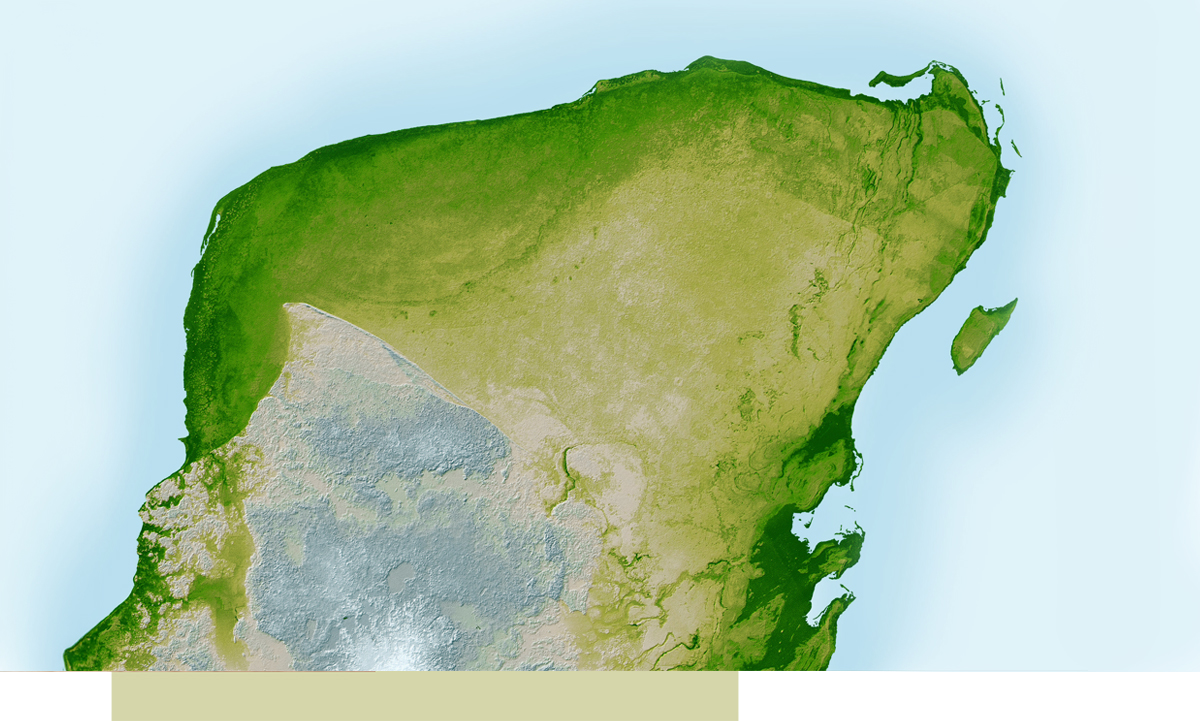
Image: Courtesy SRTM Team NASA/JPL/NIMA
The Yucatán Peninsula brings together an extraordinary natural and cultural heritage. Its vast tropical forests are home to jaguars, tapirs, monkeys, ocellated turkeys and hundreds of bird species. Along its coasts, the connection among mangroves, seagrass beds and reefs sustains the health of the Mesoamerican Reef System. Beneath the surface, its karst geology has created an extensive network of caves, underground rivers and thousands of cenotes, linking forests, wetlands and coastal environments into one great ecological system.
This landscape also preserves an exceptional history. The ring of cenotes reveals the mark of the Chicxulub impact, while flooded caves have preserved remains of some of the earliest inhabitants of the Americas and of Ice Age fauna. The Maya culture developed on this land, and its presence, language, knowledge, worldview and traditions remain alive. Nature, geology, water and culture are deeply intertwined, making the Yucatán Peninsula a one-of-a-kind region in the world.



Sal a Pajarear is an ecological awareness program for children. With the help of volunteer instructors, children explore the local ecosystem through observation and the use of an atlas that lets them recognize and study different birds. In this way, they discover a love for learning about the animal world and their surroundings, while developing socioemotional skills through interaction with other children.
The Sal a Pajarear program began in 2014 on the Yucatán Peninsula. Over the years, it has had 69 communities as allies, with the participation of 198 volunteer instructors (94 women and 104 men) and 1,838 children (800 girls and 1,038 boys).
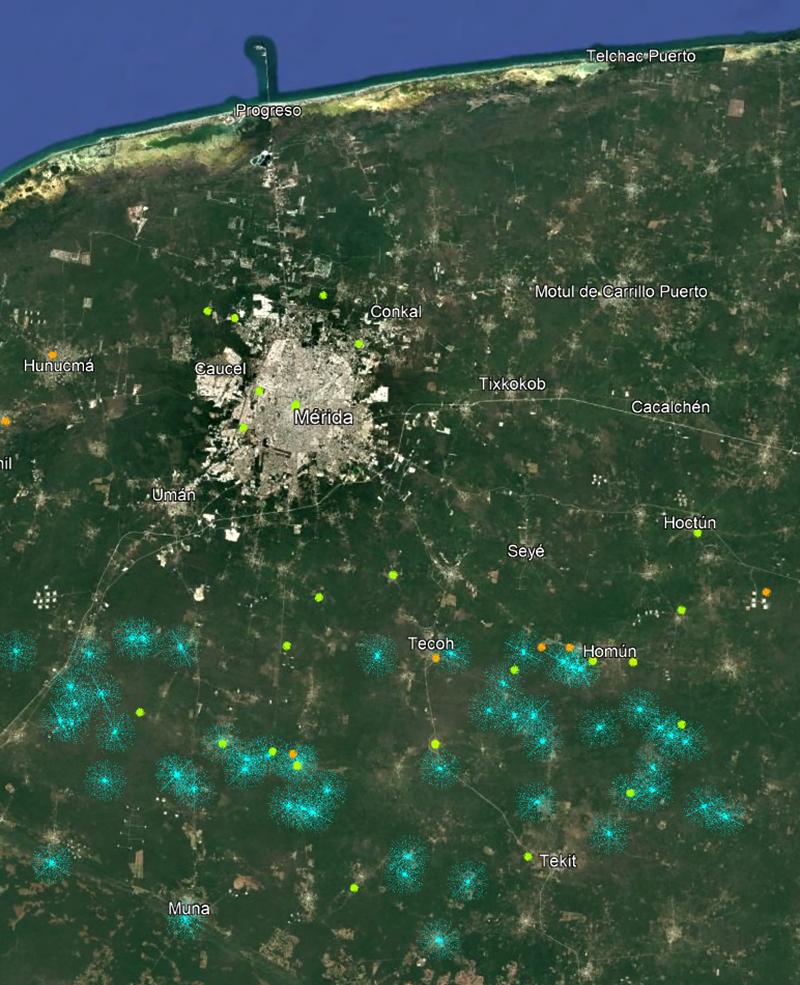
 MAYA AQUIFER ECOLOGICAL INTEGRITY NETWORK (RIEAM)
The Maya Aquifer is the main source of water for millions of people and a vital reservoir of biodiversity. It faces growing threats from agrochemicals, urban waste, real estate pressure and a lack of effective environmental regulation.
As a continuation of the Ts’onot project, the Maya Aquifer Ecological Integrity Network (RIEAM, for its Spanish acronym) was created in 2025, made up of six organizations from Yucatán and Quintana Roo. Its goal is to strengthen the aquifer’s ecological integrity by connecting local communities, organizations, experts and funders to protect and sustainably manage cenotes.
The project has four components: training of leaders and technicians; assessment and monitoring of ecological integrity; adaptive solutions; and communication strategies.
In July and August 2026, the first assessment campaign was carried out in 60 cenotes using an agreed-upon methodology. The Collaborative Leadership Diploma Program also began, with 35 community leaders and leaders from the six organizations. Cine en el Campo is also under way, and the Ecological Integrity Operations Manual is being co-created. Currently participating are Centinelas del Agua, Amigos de Sian Ka´an, Cenotes Urbanos, Cenoteando, GIPS-BACAB y TAE, A.C.
The project is supported by the Gonzalo Río Arronte Foundation, the W. K. Kellogg Foundation, the Harte Charitable Foundation, the Summit Foundation and the Claudia and Roberto Hernández Foundation.